|
29/05/2001 |
|
|
From the Press Officer : Richard S. Greenhough |
|
|
Review of recent events including land purchases, Vice President appointments, Dulas model and informal H.M.R.I. visit. |
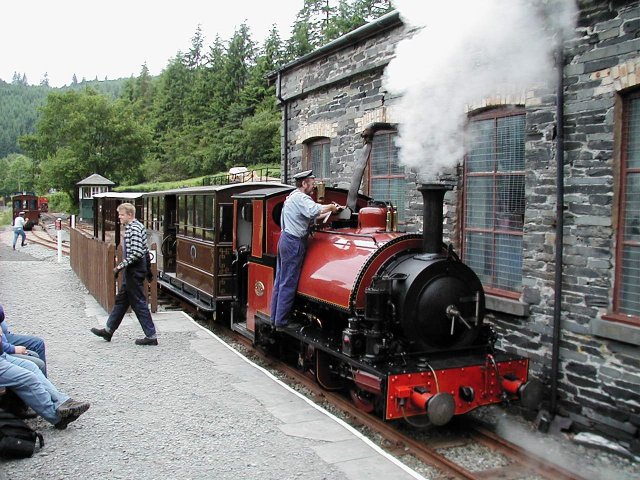
The Corris Railway
continues it's steady progress towards recommencing passenger
services. With the first section of track from Corris to
Maespoeth now completed to passenger standards, and the initial
passenger train ready, fitted with continuous braking and audible
communications between driver and guard, only the need to
complete the complex paperwork leading to a Transport & Works
Order (T&WO) is delaying matters.
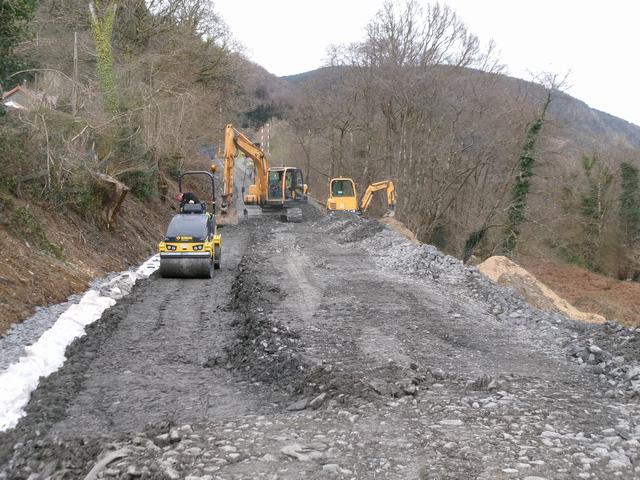
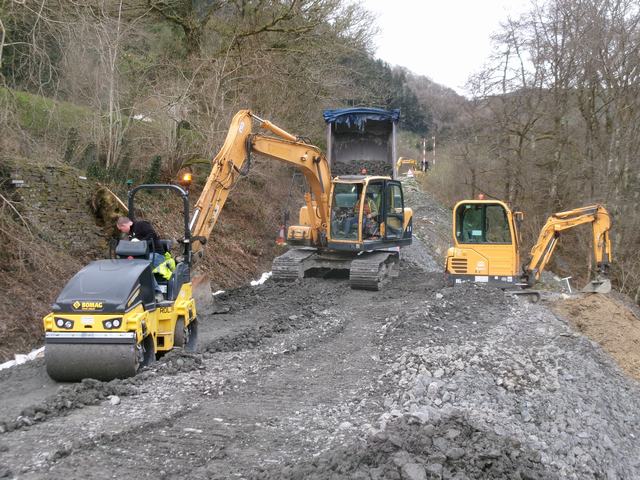
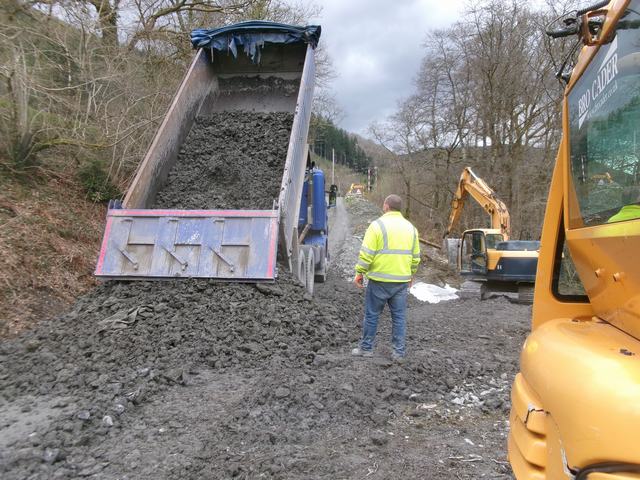
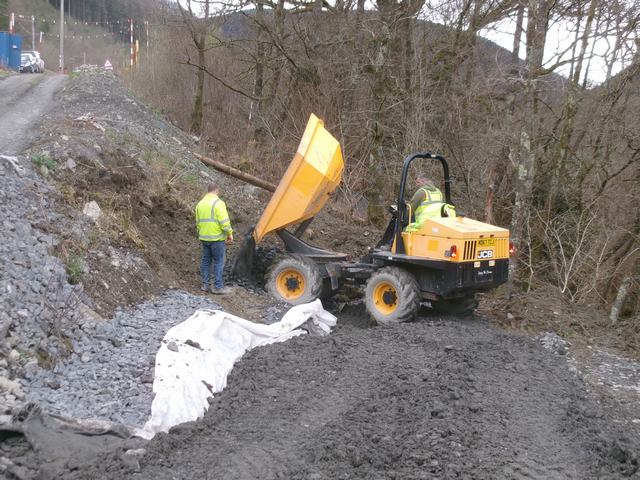
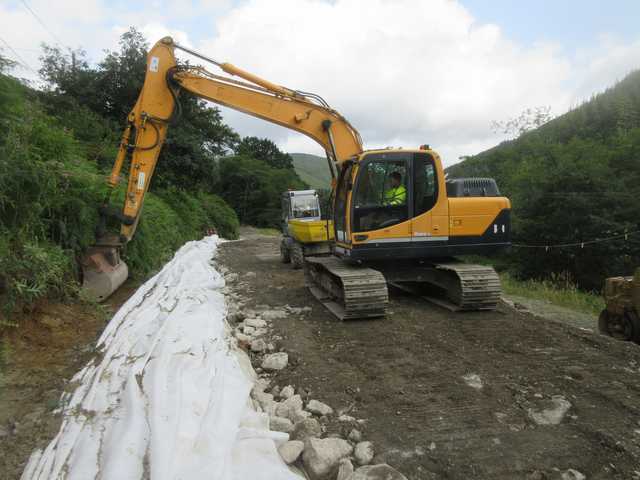
A major breakthrough has been the purchase of two fields to the
south of Maespoeth, lying between the A487 trunk road and the
Afon Dulas, which are needed to construct a deviation route at
Pont-y-Goedwig, where the original railway formation has been
breached by highway works. Without agreement to construct a new
formation across this land the railway would not have been able
to extend any distance south of its present railhead, harming the
long-term viability of the project. Lengthy negotiations with the
landowners having reached a successful conclusion, the Railway is
now able to proceed with its plans to obtain a T&WO for the
two-and-a-half mile section of the line from Corris to
Tan-y-Coed. Work on the deviation will not commence until the
T&WO has been obtained.
At the beginning of February the Railway was visited by Major
John Poyntz of H.M. Railway Inspectorate for an informal
inspection, and after a very positive session, an agreed list of
work that needs to be completed, both on the Railway's
infrastructure and on the accompanying paperwork, has been drawn
up to meet Major Poyntz's recommendations. The Railway is now
working to fine-tune the infrastructure accordingly, and planning
to run trial operations during the summer as a preparation for
the recommencement of passenger services. Although there will be
no public passenger service during the summer of 2001, the Corris
Railway Museum will be open to visitors, with the opportunity to
see progress on the Railway at the adjacent Corris Station.
The Society is keen to maintain the feel of the original Corris
Railway wherever possible, an important element being to operate
rolling stock that matches the items used in former times. With
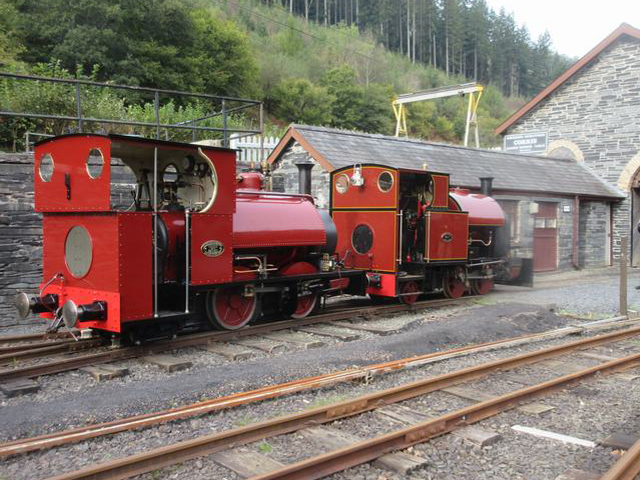
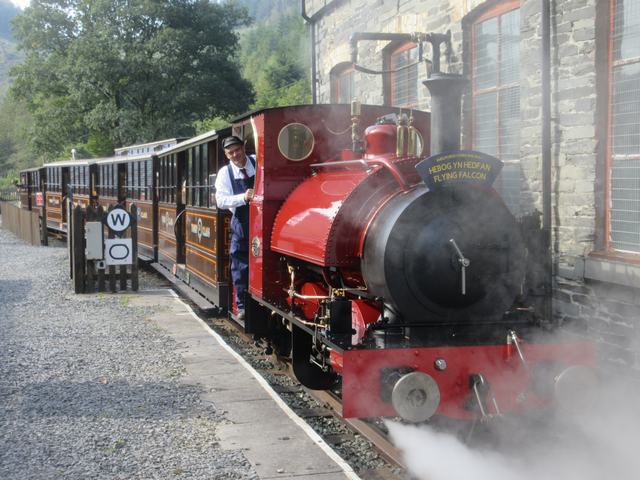
the "Tattoo" steam locomotive project well under way,
and work having commenced on the first of a set of new bogie
carriages, Society members have provided a Heritage fleet of four
restored waggons, each the representative of a type that ran on
the railway before closure. Members in the East Midlands have
undertaken the restoration work, with the waggons returning to
Corris looking as good as new. At Easter the latest arrival, a
two-plank tie-rod waggon originating from Aberllefenni Quarry,
joined the unique trestle slab waggon, an end-door metal-bodied
waggon, and a side-door metal-bodied waggon.
Armley Mills Industrial Museum in Leeds has donated three
manrider vehicles to the Railway, which are being assessed for
their suitability to form the basis of future passenger
carriages. Of uncertain origin, they are currently 2'3 ½"
gauge, compared to the Corris' 2'3", so should not prove
difficult to re-gauge.
The highlight of the Society's annual Model Railway Exhibition in
Machynlleth over the August Bank Holiday weekend last year was
the display of Andrew Sewell & Barry Jeffrey's much-acclaimed
"Dulas" model, showing the Corris Railway as it was in
the late 1920s. After the exhibition, Andrew & Barry very
generously donated the model to the Society, and it was decided
to give the Corris Railway Museum a major facelift over the
winter, in order to incorporate the model as the centrepiece of a
revised layout featuring many new displays. Visitors were able to
get a first look at the new Museum at Easter, although the work
will not be completed until the start of the main summer opening
season.
We are delighted to announce that the noted railway historian,
Gwyn Briwnant Jones, has agreed to become a Vice-President of the
Society. Gwyn's grandfather was a locomotive driver on the Corris
in the early years of the twentieth century, and his father and
uncle were both closely connected with the line, so his
involvement strengthens the Society's link with the original
Railway. He joins a distinguished group of Vice-Presidents, which
also includes Sir George White, Bt, and Lady Elizabeth White,
both of whose grandfathers were directors of the original Corris
Railway Company in the 1920s.
For more information visit our web-site at :
"www.corris.co.uk"
RSG May 2001